1892 opera by Ruggero Leoncavallo.
Pagliacci is a tragedy that takes place among the actors in a Commedia dell'arte troupe.
The commedia plot plays out in real life. The leader of the troupe, Canio, plays the "foolish husband" Pagliaccio. His wife, Nedda, plays the slutty wife Columbina. Before the performance begins, Pagliaccio leaves to go drinking. While he's gone, his wife Nedda sees her lover and they plot to elope later that night. Canio comes back and sees her lover run away, but doesn't see his face. He begs Nedda to tell her who, but she refuses.
In Act II, they perform the commedia plot, which pretty much mirrors what just happened. When Pagliaccio returns home and hears Columbina tell her love goodbye, Canio breaks character and demands that Nedda tell him the name of her lover. She tries to put him back on track for the performance, but he's distraught. Finally, he stabs her. As she dies she calls out her lover's name and Canio kills him too. The play ends when Canio announces "La Commedia è finita!" (the play is finished).
Infidelity! Jealousy! Rage! Murder! Performance! Costumes! Clowns!
Relevent!
Go read a more detailed plot summary on Wikipedia if you're interested.
The dramaturgy casebook for the Carnegie Mellon University production of Lulu by Frank Wedekind. Blog by dramaturg Kendra Lee. Spoiler alert and trigger warning!
Wednesday, February 16, 2011
Artists Referenced in the Show: Raphael
Renaissance Italian painter.
![]() |
| The Three Graces. 1504. |
![]() |
| The Triumph of Galatea. 1511. |
![]() |
| The Entombment of Christ. 1507. |
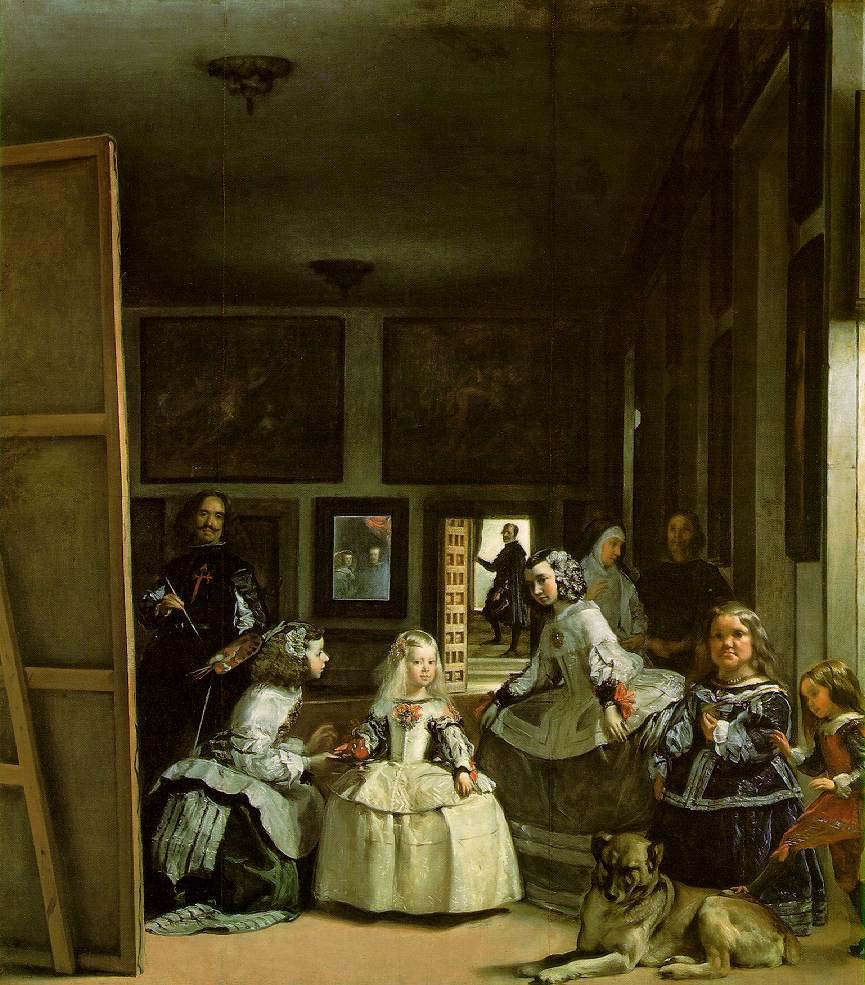
Artists Referenced in the Show: Velazquez
Late Renaissance Spanish painter.
Fun Fact! The mirror in The Rokeby Venus is actually pointing at her lower stomach/crotch.
![]() |
| The Toilet of Venus ("The Rokeby Venus") 1647-1651 |
![]() |
| Las Meniñas, 1656 |
Artists Referenced in the Show: Caravaggio
Italian Renaissance painter.
Fun fact! Steak carpaccio, which is raw tenderloin sliced extremely thin, was named after Caravaggio because of the rich reds he used.
| |
| Boy Bitten by Lizard. 1594-1596 |
![]() | |||||||||||||||
| Medusa. 1590-ish |
![]() |
| St Jerome. 1600. |
Wednesday, February 9, 2011
Fear. Sexy, Sexy Fear.
This is a sidebar ad I found on a porn site.
This ad presumes that men are comparing themselves to the unrealistic, manufactured images they see in pornography. That’s also how Lulu comes to be idolized by the men in our play- they worship the image of her that each of them has in his own head.
But that’s not the best reason why this ad is so relevant. The selling point for a bigger dick isn’t to please your partner, but to make her afraid. Women’s fear is sexy. Unless you can threaten a woman with your penis, you need a scarier penis.
This ad suggests that despite how afraid women supposedly are of his penis, Ron Jeremy has a ton of sex with a ton of women. It suggests to whomever is consuming the ad that women like sex that is violent. Violence is sexy.
An ad like this works because men have a lot of unrealistic expectations and preconceived notions to deal with, and it's tough to navigate the world with a unique identity when society is telling you there's only one "correct" way for you to be. There is a lot of pressure on men as well as women to look and behave in a certain way- women are supposed to be skinny and passive while men are supposed to be big, muscular and active. Men are "supposed" to be the persuers, not the persued. Men are supposed to be the one who humiliates, not the humiliated and not an equal. They're supposed to be the provider, not the provided-for, the keeper not the kept, the one penetrating his partner and never the penetrated. Men can tolerate it (but not actually care) when women get emotional but men should never express their own emotions to their female partners.
When someone takes all of those messages to heart, the final product is the aggressive, violent, horny guy with terrifying genitals. No one can live up to that, and really, who wants to? Mainstream porny culture shoves men and women into certain roles that people can enjoy, but no one really picks for themselves.
The Game
This is the cover for The Game by Neil Strauss, a book that explains the contemporary dating/pickup scene. It’s a sort of exposé, sort of how-to manual. I just want to point your attention to some things about the cover specifically, without even getting into how creepy the text of the book actually is.
For one thing, the male figure is about three times as big as any one of the female figures. He’s a person, the women are toys.
There’s only one of him and lots of women. He’s entitled to collect ‘em all.
He’s standing upright, cool, composed, a person in a suit with shit to do. Each of the female figures is in a different kind of porny pose and/or costume. They don’t wear suits. They don’t have shit to do, other than contort their bodies into aesthetically pleasing though uncomfortable shapes, wear 7-inch platform heels, cling to phallic objects, and touch themselves.
The fact that there are several of them with the same body but different poses/costumes implicitly states that though the man is an individual, the women are all the same, despite the differences in their outer appearances.
One of the female silhouettes has her hands tied behind her back and her legs placed in a spreader bar, clear BDSM imagery. When actual BDSM practitioners play with actual BDSM rules, both partners talk beforehand about their limits and both partners are free to stop the action at any time, immediately and with no questions asked. When BDSM imagery is brought up in the mainstream with none of the BDSM rules, all we see is a woman as a bound victim, a series of holes to be taken by force. In actual BDSM the submissive is an equal partner, a full human being with limits to be respected and desires to be fulfilled. In mainstream images of BDSM, she absolutely is not.
The word “Penetrating” is there right underneath a lineup of ladybodies. That one’s pretty obviously gross.
In “The Game,” women aren’t players, and they’re not really the prize. They’re the obstacle standing between men- the real players- and “sex,” the prize (please refer to the Thomas MacAulay Miller article from Yes Means Yes, in the packets I gave you all).
I love Lulu in lots of really different costumes to illustrate the desires of the different men she’s with. The book cover implies that the man who buys it can pick up his favorite “type” of woman, no matter what type that is. The men in our play see a female body and automatically project their favorite “type” onto her. The woman’s own identity isn’t what’s important- the man’s desire is.
I also like the idea of seeing Lulu in silhouette a lot. The details of her person aren’t as important as the mere fact that she’s female.
Subscribe to:
Posts (Atom)